
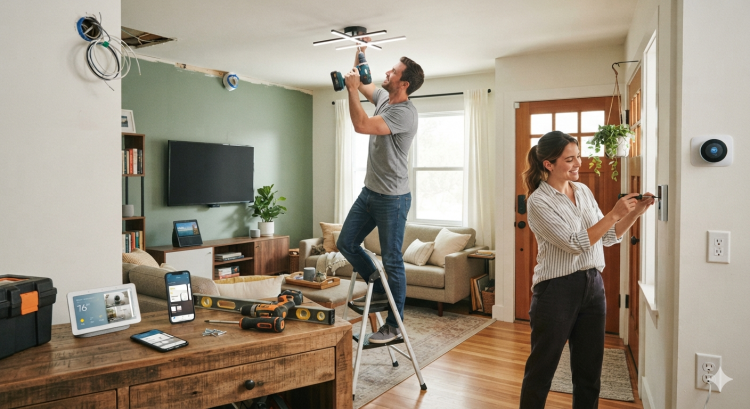
Home improvement is no longer limited to painting walls, replacing furniture, or renovating kitchens. Today, homeowners are increasingly combining traditional home upgrades with smart home technology to create spaces that are more comfortable, efficient, secure, and convenient.
From smart lighting and thermostats to security cameras and energy-monitoring devices, technology is changing how people interact with their homes. At the same time, simple improvements such as better insulation, organized storage, and energy-efficient appliances can make a significant difference in everyday life.
What Is a Smart Home?
A smart home uses connected devices that can communicate with each other and be controlled through smartphones, voice assistants, or automated routines. These devices can help homeowners manage lighting, temperature, security, entertainment, and energy consumption.
For example, a smart thermostat can adjust the temperature based on schedules or preferences, while smart lights can be programmed to turn on or off automatically.
The goal isn’t simply to fill a home with gadgets. A well-designed smart home should make everyday tasks easier while providing practical benefits.
Popular Smart Home Improvements
1. Smart Lighting
Smart lighting is one of the easiest ways to begin upgrading a home. Smart bulbs and switches allow homeowners to control lights remotely and create schedules.
Some systems can automatically turn lights off when nobody is home, helping reduce unnecessary electricity consumption. Homeowners can also create different lighting settings for working, relaxing, or entertaining guests.
2. Smart Security
Home security has become an important part of smart home technology. Connected cameras, video doorbells, smart locks, and motion sensors can help homeowners monitor their property.
Many security devices can send notifications to a smartphone when they detect movement or unusual activity. Smart locks can also allow homeowners to control access without traditional keys.
However, security devices should always be configured with strong passwords, updated software, and appropriate privacy settings.
3. Smart Thermostats
Heating and cooling can represent a significant portion of household energy use. Smart thermostats can help homeowners manage temperature more efficiently by using schedules, sensors, and automated adjustments.
Instead of keeping the same temperature throughout the day, homeowners can create settings based on when people are actually at home.
Energy-Efficient Home Improvements
Smart technology isn’t the only way to improve a home’s efficiency. Traditional upgrades can also provide substantial benefits.
Improving insulation, sealing air leaks, upgrading windows, and installing energy-efficient appliances can help reduce energy waste.
LED lighting is another simple improvement. LED bulbs generally use less energy and last longer than traditional incandescent bulbs, making them a practical upgrade for many households.
Homeowners can also consider smart plugs and energy-monitoring devices to understand how much electricity different appliances consume.
Creating a Smart Home on a Budget
A smart home doesn’t have to be expensive. Instead of replacing everything at once, homeowners can start with a few useful devices.
For example, a basic upgrade might include:
- Smart LED bulbs
- A smart plug
- A video doorbell
- A smart speaker
- A smart thermostat
Before purchasing devices, check whether they are compatible with the existing smart-home ecosystem. Compatibility can prevent homeowners from ending up with multiple disconnected systems.
It’s also important to consider subscription costs. Some security and smart-home products require monthly fees for advanced features, so the long-term cost should be considered before buying.
Home Improvement Ideas Beyond Technology
Technology is only one part of improving a home. Small physical improvements can have an equally noticeable impact.
Creating better storage can reduce clutter, while improving kitchen organization can make cooking easier. Fresh paint, improved lighting, updated fixtures, and comfortable furniture can also change the appearance of a room without requiring a complete renovation.
For homeowners planning larger projects, it’s important to establish a realistic budget before starting. Unexpected costs can quickly increase the price of renovations.
The Future of Smart Homes
Smart homes are becoming increasingly focused on automation and energy efficiency. Instead of manually controlling every device, homeowners can create routines that allow multiple devices to work together.
For example, leaving home could trigger a routine that locks the doors, turns off unnecessary lights, adjusts the thermostat, and activates security monitoring.
Artificial intelligence is also expected to make smart-home systems more adaptive. Instead of simply following predefined commands, future systems may increasingly learn household patterns and make recommendations or adjustments automatically.
Conclusion
Home improvement and smart-home technology offer homeowners many ways to create more comfortable, efficient, and convenient living spaces. From smart lighting and security systems to insulation, energy-efficient appliances, and better organization, improvements don’t always require a major renovation.
The best approach is to focus on practical upgrades that solve real problems. Start with improvements that provide clear value, ensure new devices work together, and consider both upfront and long-term costs.
A smarter home isn’t necessarily the home with the most technology. It’s a home where technology and thoughtful design work together to make everyday life easier.



No Comments
Leave Comment